

 Facebook
 X
 Pinterest
 Copy Link
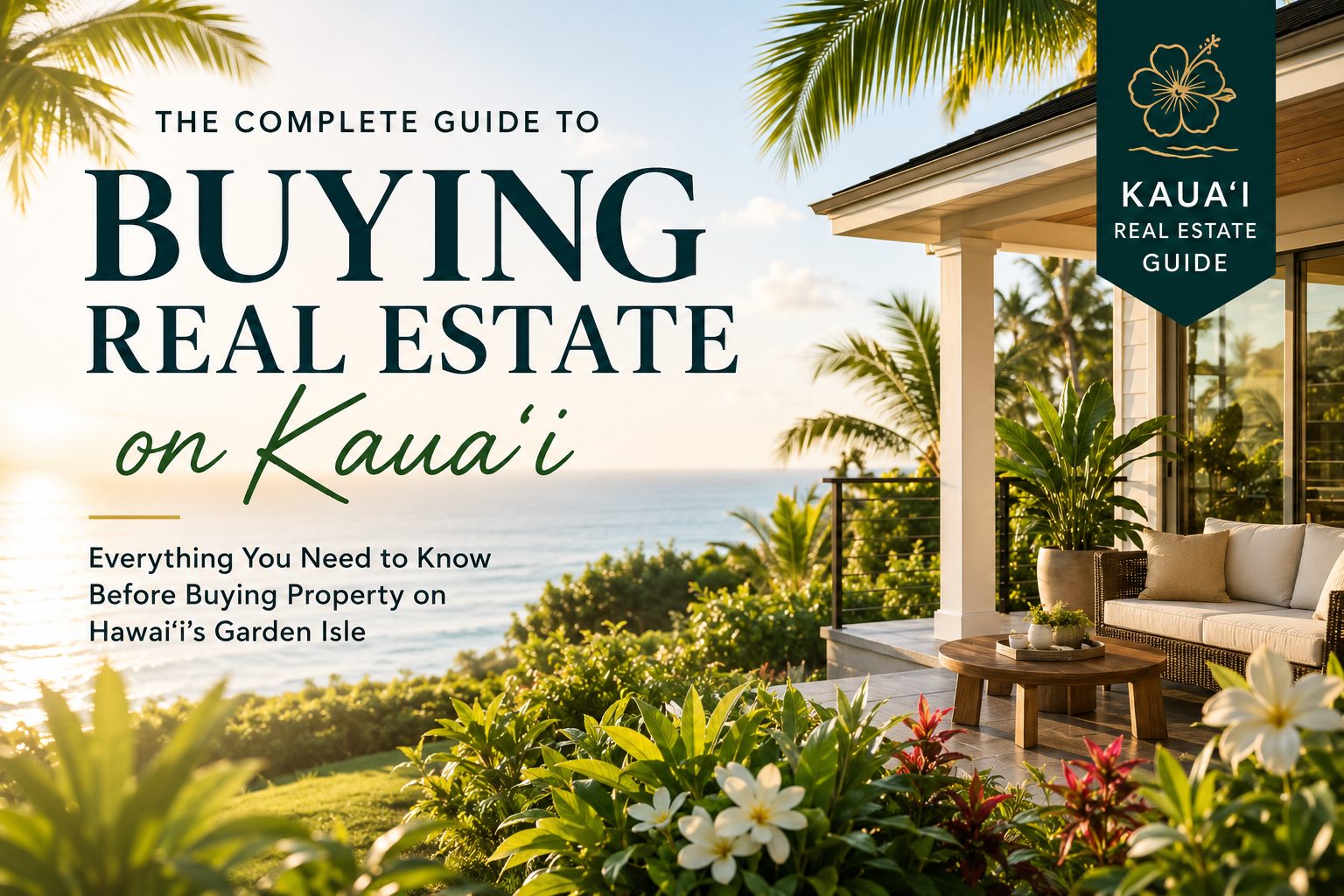
The Complete Guide to Buying Real Estate on Kauaʻi
Whether you’re purchasing your first home, a vacation property, an investment opportunity, or your forever home, buying real estate on Kauaʻi is unlike buying property almost anywhere else. Hawaii has unique laws, financing options, property types, and environmental considerations that every buyer should understand before making an offer.
This guide is designed to walk you through the entire process—from deciding you’re ready to buy through receiving the keys at closing. Along the way, I’ll explain many of the terms and concepts you’ll encounter, and I’ll link to more in-depth guides covering each topic.
Why Buying Property on Kauaʻi Is Different
Kauaʻi isn’t just another real estate market.
As Hawaii’s oldest island, Kauaʻi offers breathtaking scenery, world-class beaches, luxury communities, agricultural land, historic towns, and some of the most desirable oceanfront properties in the world. With that beauty comes unique considerations that buyers may not encounter elsewhere.
Some of those include:
* Fee Simple vs. Leasehold ownership
* CPR (Condominium Property Regime) properties
* Vacation Rental (TVR) regulations
* Agricultural zoning
* Flood zones and coastal insurance
* Shoreline setbacks
* Homeowners Associations (HOAs)
* Salt air and tropical home maintenance
* Specialized financing for higher-priced properties
Understanding these topics before you begin shopping can save time, money, and stress.
—
Step 1: Define Your Goals
Before looking at homes, ask yourself:
* Will this be my primary residence?
* Is it a second home?
* Will it be an investment property?
* Am I looking for a vacation rental?
* Do I eventually want to build?
* Will this property be part of my retirement plan?
Your answers will influence financing, taxes, insurance, location, and even which properties are available to you.
—
Step 2: Understand Your Budget
Many buyers begin by asking:
“How much house can I afford?”
The better question is:
“What monthly payment am I comfortable with?”
Your payment typically includes:
* Mortgage
* Property taxes
* Homeowners insurance
* Flood insurance (if applicable)
* HOA dues
* Utilities
* Maintenance
* Reserve savings for repairs
Understanding your complete monthly cost is often more important than focusing solely on the purchase price.
—
Step 3: Get Pre-Approved
Before touring homes, it’s usually wise to speak with a lender.
A pre-approval helps determine:
* Your estimated purchasing power
* Down payment options
* Monthly payment estimates
* Interest rate scenarios
* Loan programs that fit your goals
Common Financing Options
Some of the most common loan programs include:
* Conventional Loans
* FHA Loans
* VA Loans
* USDA Loans
* Jumbo Loans
* Portfolio Loans
* Construction Loans
* Owner-Builder Financing
* HELOCs
* Investment Property Loans
Each loan program has different requirements, advantages, and limitations. Choosing the right one depends on your financial goals and the type of property you’re purchasing.
—
Step 4: Choose the Right Area
Every part of Kauaʻi has its own personality.
Some buyers prioritize:
* Ocean views
* Walkability
* Golf communities
* Privacy
* Surfing
* Hiking
* Schools
* Agriculture
* Luxury amenities
* Rental potential
Finding the right community is often just as important as finding the right home.
—
Step 5: Start Touring Homes
Once you’re pre-approved, it’s time for one of the most exciting parts of the process.
As you tour homes, pay attention to more than finishes and curb appeal.
Consider:
* Roof condition
* Drainage
* Signs of moisture
* Mold
* Termite history
* Salt air exposure
* Flood risk
* HOA rules
* Future maintenance needs
* Nearby development
A beautiful kitchen can be replaced.
A poor location cannot.
—
Step 6: Make an Offer
Once you’ve found the right property, your Realtor will help prepare an offer.
The offer includes much more than price.
It can also address:
* Closing date
* Financing terms
* Inspection contingencies
* Appraisal contingencies
* Included appliances
* Seller credits
* Personal property
* Repair requests
Negotiation is about finding a solution that works for both buyer and seller.
—
Step 7: Escrow Begins
Once an offer is accepted, the transaction enters escrow.
During escrow, several important milestones occur, including:
* Earnest money deposit
* Home inspection
* Appraisal
* Loan underwriting
* Title review
* Insurance coordination
* Final walkthrough
* Closing documents
Escrow helps ensure that all agreed-upon conditions are satisfied before ownership transfers.
—
Step 8: Due Diligence
This is one of the most important parts of buying a home.
Depending on the property, buyers may investigate:
* Home inspections
* Pest inspections
* Sewer or septic inspections
* Survey information
* Title reports
* HOA documents
* Flood zone maps
* Insurance availability
* Property disclosures
* Building permits
* Zoning
Every property is unique, and due diligence helps buyers make informed decisions.
—
Step 9: Closing Day
After all conditions have been met and financing is complete, you’ll sign your closing documents.
Once the deed is recorded, ownership officially transfers to you.
Congratulations—you’ve just purchased real estate on one of the most beautiful islands in the world.
—
Common Questions About Buying Property on Kauaʻi
Can non-Hawaii residents buy property?
Yes. Buyers from anywhere in the United States and many international buyers can purchase real estate in Hawaii, though financing, taxes, and reporting requirements may differ depending on your circumstances.
Do I need a local bank?
Not necessarily. Many buyers work with mainland lenders, Hawaii-based lenders, or local credit unions.
Are HOA fees common?
Many condominiums, planned communities, and resort neighborhoods have HOA dues. These fees vary significantly depending on the amenities and services provided.
Is flood insurance required?
Some properties located within designated flood hazard areas may require flood insurance if financed. Even when it’s not required, some homeowners choose to carry flood coverage for added protection.
Are oceanfront homes more expensive to maintain?
Generally, yes. Salt air, wind, moisture, and sun exposure can accelerate wear on exterior materials, making routine maintenance especially important.
—
Christina’s Pro Tip
One of the biggest mistakes buyers make is focusing solely on the purchase price.
The true cost of homeownership includes insurance, maintenance, utilities, HOA dues, future repairs, and how well the property fits your long-term goals. A home that looks less expensive upfront isn’t always the most affordable over time.
—
Buying property on Kauaʻi is an exciting journey, but it’s also one of the biggest financial decisions most people will ever make. Taking the time to understand the process, ask questions, and build the right team can make all the difference.
Whether you’re searching for your first home, a luxury estate, a vacation retreat, or an investment property, my goal is to help you make confident, informed decisions every step of the way.
If you have questions about buying, selling, financing, or owning property on Kauaʻi, I’d be honored to be a resource for you.
