

 Facebook
 X
 Pinterest
 Copy Link
Navigating the Pipeline: How the Escrow Process Works in Hawaii Real Estate
Whether you are acquiring a luxury beachfront retreat in Hanalei, a resort condo in Princeville, or a parcel of land in Kilauea, writing an accepted offer is only the first step. The true operational work of transferring real estate in Hawaii happens within a structured, neutral holding environment: Escrow.
For mainland buyers accustomed to how real estate closings operate in states like New York or California, Hawaii’s escrow process can feel distinctly different. In Hawaii, closing is not handled by attorneys at a single boardroom table; it is managed by a licensed, independent Escrow Officer who serves as a neutral third-party trustee for both buyer and seller.
Understanding the mechanics of the escrow pipeline is the key to a smooth, stress-free transaction that protects your capital every step of the way.
- Phase 1: Opening Escrow & Deposit Allocation
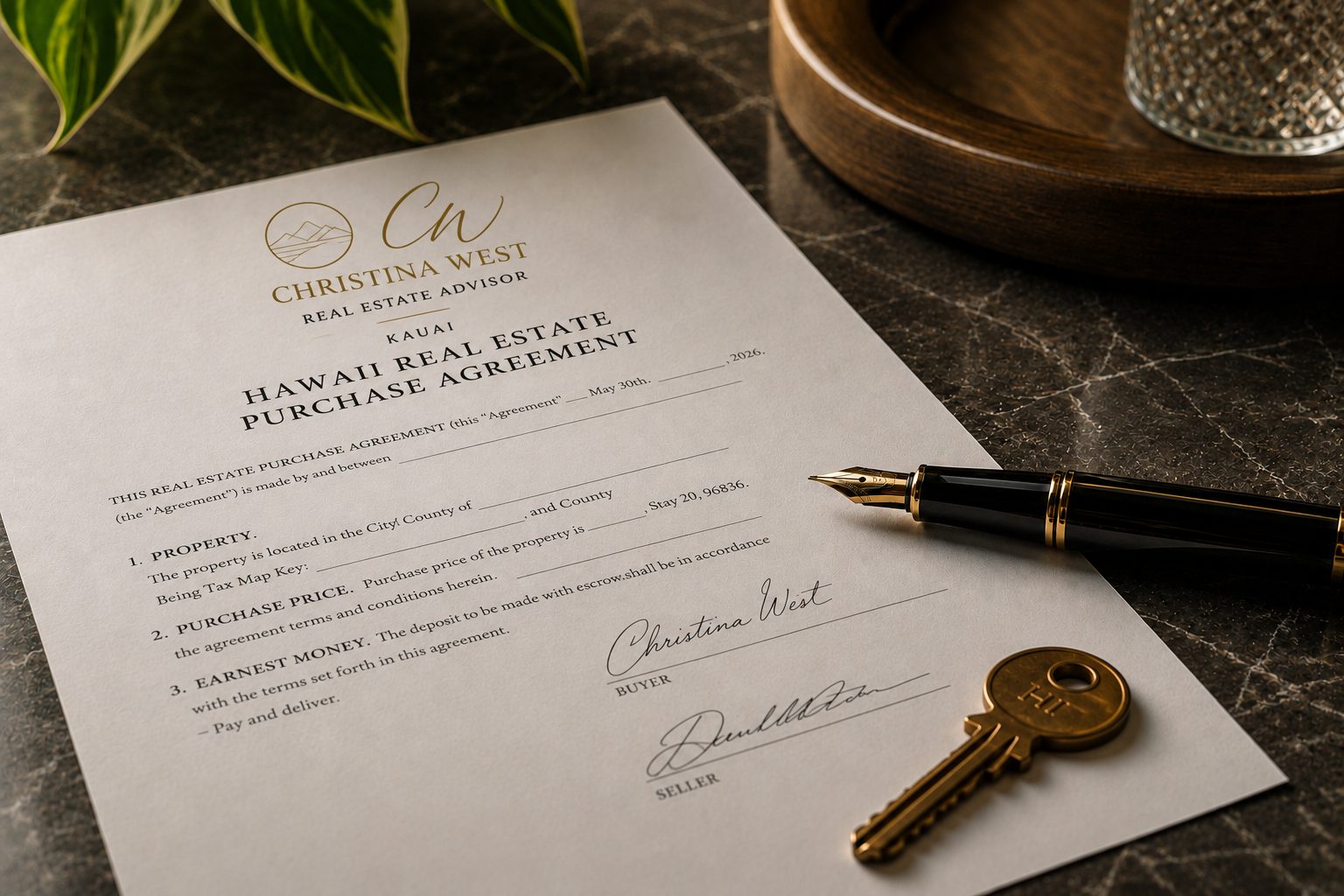
Once a Purchase Contract (PC) is fully executed by both buyer and seller, it is formally delivered to a Hawaii-licensed escrow company (such as Title Guaranty Hawaii or Fidelity National Title).
- The Opening: Escrow opens the official transaction file and issues formal Escrow Instructions outlining the terms agreed upon in the contract.
- Initial Earnest Money Deposit (EMD): The buyer must wire their initial deposit—typically 1% to 3% of the purchase price for luxury properties—into escrow’s neutral trust account, usually within 3 business days.
- The Neutral Vault: Escrow holds these funds in trust. Neither the buyer nor the seller can access or withdraw this money without mutual written agreement or a specific contractual contingency release.
- Phase 2: Due Diligence & Title Verification
During the active escrow period—which typically spans 30 to 60 days depending on whether financing is involved—escrow acts as the central hub coordinating all critical legal and financial documentation.
- Preliminary Title Report: Escrow generates a preliminary title report detailing the property’s ownership history, active liens, easements, and encumbrances. This confirms the seller can deliver clean, clear title at closing.
- Document Clearing: Escrow works with the seller to clear any existing mortgages, tax liens, or association judgments before title transfers.
- HOA/AOAO Document Coordination: For condos or planned communities, escrow requests the formal Association of Apartment Owners (AOAO) document package, including financial statements, reserve studies, and meeting minutes for the buyer’s review.
- Phase 3: Final Funding & Recording at the Bureau
In many states, “closing day” means sitting in an office, signing papers, and receiving the keys immediately. In Hawaii, closing is a multi-step process tied directly to the state recording system.
- Signing Day (H-minus 3 to 5 Days): Both parties sign their final closing documents (Deed, Mortgage documents, Settlement Statements) several days beforethe actual closing date. Out-of-state buyers can sign via a mobile notary arranged by escrow.
- Final Wire Transfer: The buyer’s remaining down payment or cash balance (and loan proceeds from the lender) must be fully cleared and wired into escrow’s trust account at least 2 business days prior to closing.
- Recording at the Bureau of Conveyances: Hawaii real estate does not record at the local county office. All property deeds are recorded centrally at the State Bureau of Conveyances in Honolulu.
- Official Closing: Escrow submits the Deed to the Bureau. Once the Bureau officially timestamps and records the document (typically around 8:00 AM Hawaii Standard Time on the scheduled closing date), the transaction is officially closed, funds are disbursed, and ownership officially transfers to the buyer.
A Meticulous Approach to Transaction Management
A smooth escrow relies on precise timeline tracking, proactive communication, and zero missed deadlines. In a standard Hawaii Purchase Contract, time is explicitly “of the essence”—meaning missing a contingency deadline by even a few hours can put earnest money deposits at risk.
When guiding clients through transactions on Kauai, my role is to serve as a rigorous project manager alongside escrow. We monitor every contingency milestone—from inspection approvals and title reviews to appraisal releases and wire transfers—ensuring your capital remains protected from opening deposit to final deed recording.
